Why Lawn Aeration Matters
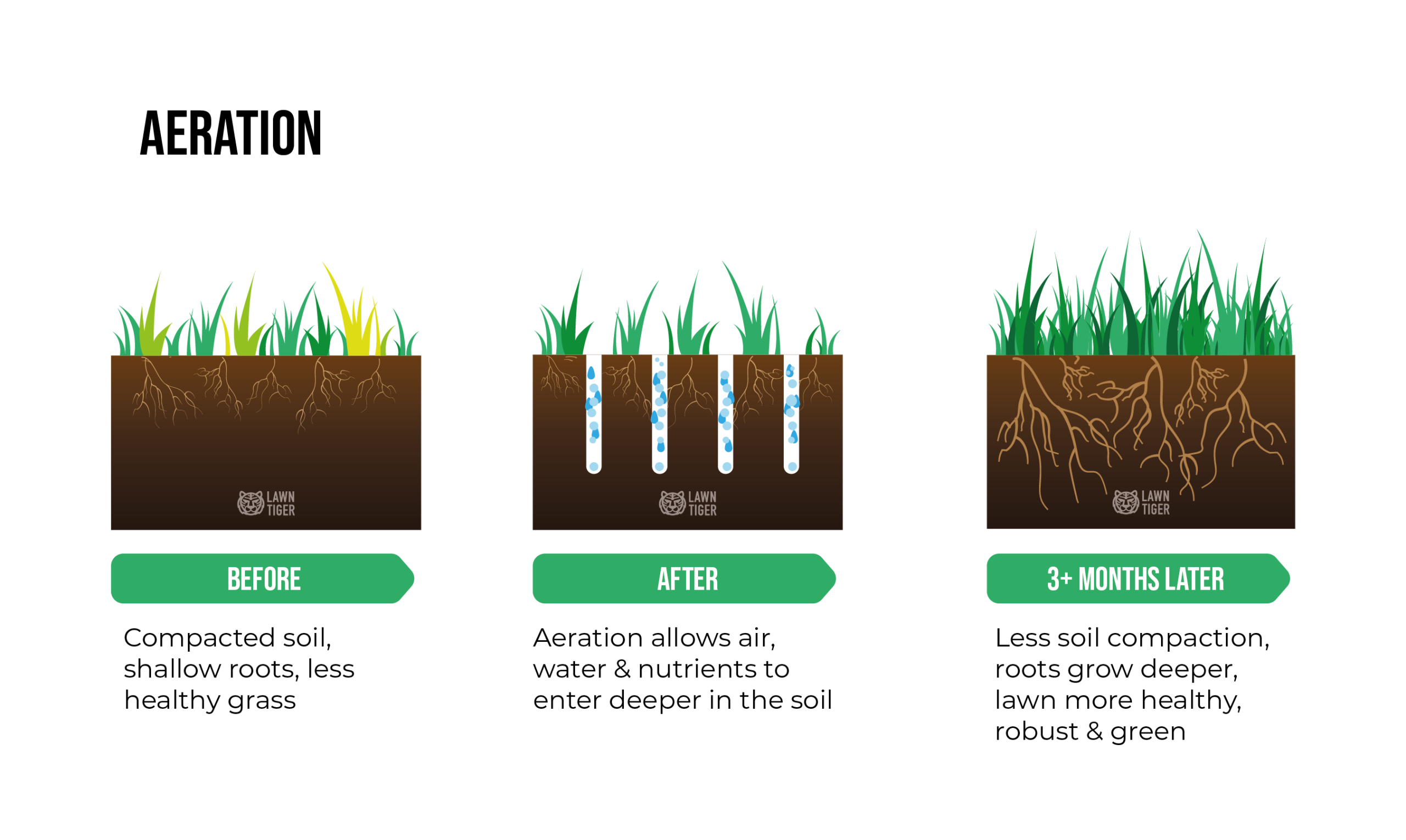
Healthy lawns are built from the soil upwards. Grass roots need oxygen, moisture and access to nutrients to thrive. When soil becomes dense and compacted, those essentials cannot circulate freely. Aeration improves the movement of air and moisture into the soil profile and encourages roots to grow deeper. Deeper roots help the lawn cope more effectively with dry periods, wear and seasonal stress. Compaction is particularly common in domestic gardens where lawns are used regularly. Even lawns that appear green on the surface can be struggling beneath.
What Lawn Aeration Can Help With
Lawn aeration supports overall soil health and can contribute to:
• Stronger, deeper root systems
• Improved nutrient uptake from fertilisers
• Better movement of air and moisture into the soil
• Reduced surface compaction
• Greater resilience during seasonal stress
It is important to understand that aeration supports soil structure rather than acting as a quick fix. On naturally heavy clay soils, drainage characteristics are largely determined by soil type and underlying ground conditions. Aeration can help improve surface infiltration and root development, but it does not fundamentally change the soil type itself.
Tailored Aeration for Your Lawn
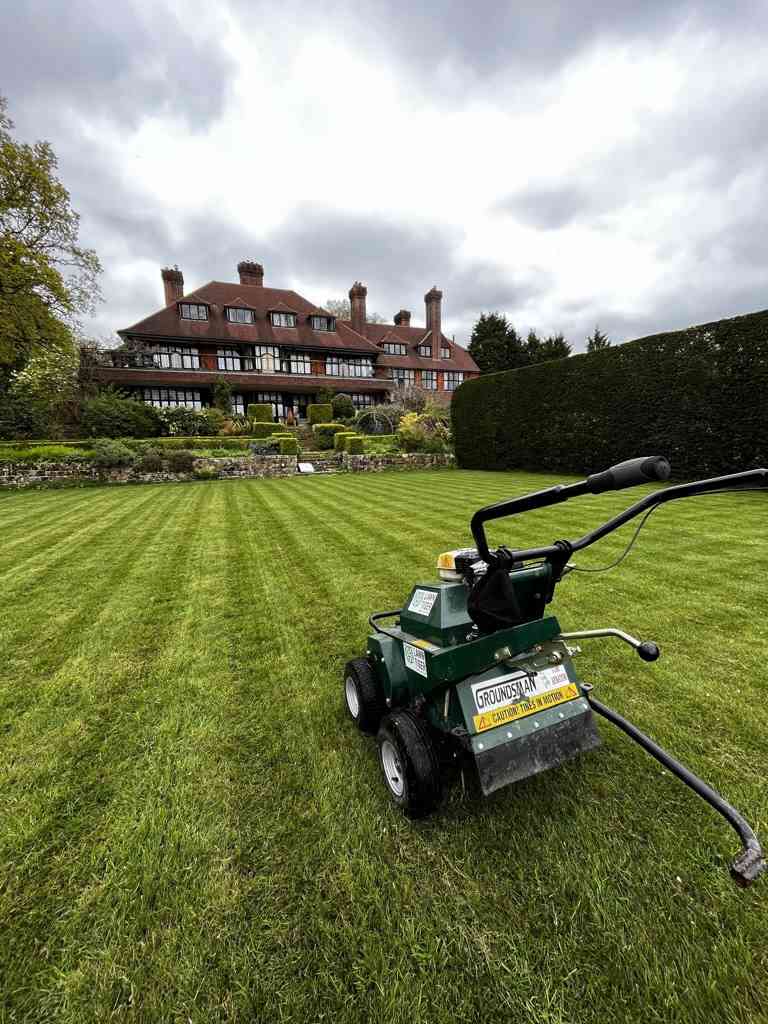
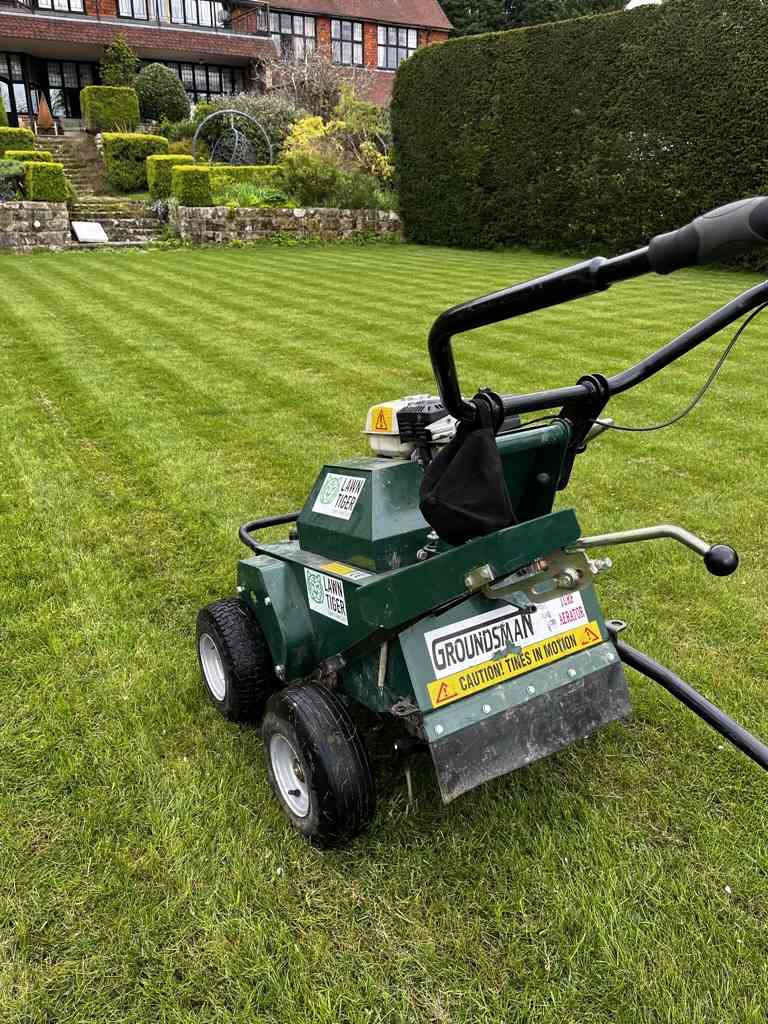
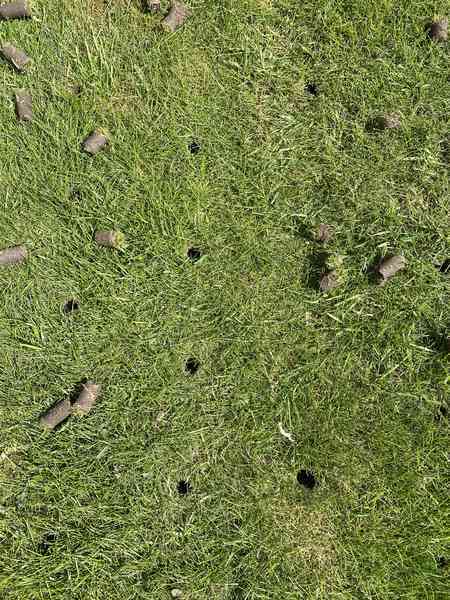
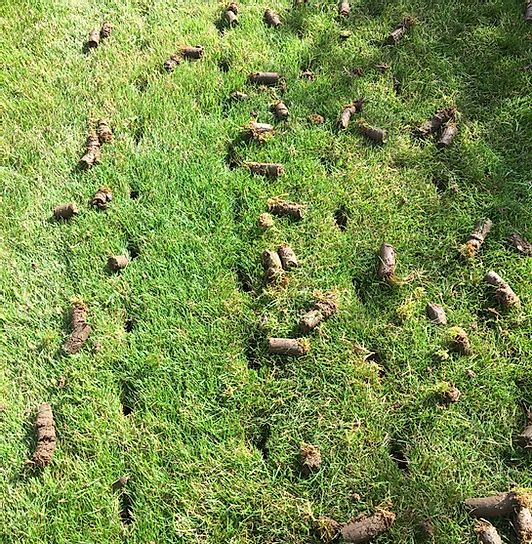
Every lawn is different. Soil type, level of use, grass species and overall condition all influence the approach required. We do not offer a one size fits all aeration method. Instead, we assess your lawn carefully and select the most appropriate professional machinery and technique for its condition and the time of year. In some cases, aeration forms part of a wider lawn renovation programme. In others, it is carried out periodically as part of ongoing lawn care to maintain healthy soil structure and prevent compaction building up over time. Following aeration, you may notice small holes in the surface. This is completely normal and settles naturally as the lawn recovers.
Is Aeration a Solution for Waterlogged Lawns?
If your lawn suffers from standing water during prolonged wet weather, the cause is often related to heavy clay soil, underlying drainage limitations or water table levels. Aeration can assist by improving the movement of water into the upper soil layers and reducing surface compaction. However, it is not a cure for naturally poorly drained ground. Where appropriate, we will always provide honest guidance on what aeration can realistically achieve for your specific lawn.
When Is the Best Time to Aerate a Lawn?
Aeration is typically carried out during the main growing seasons, when the grass can respond positively and recover well. Timing depends on soil moisture levels and overall lawn condition. We only carry out aeration when ground conditions are suitable to ensure meaningful improvement without causing unnecessary stress.
Lawn Aeration Across Surrey, Sussex & Kent
We provide professional lawn aeration services to domestic properties across Surrey, Sussex and parts of Kent, including areas such as Cobham, Reigate, Oxted, Horley, Horsham, Haywards Heath and surrounding towns. If your lawn feels hard underfoot, struggles during dry periods or shows signs of surface compaction, aeration may form an important part of improving its long term health.
Frequently Asked Questions
How often should a lawn be aerated?
Most domestic lawns benefit from aeration every one to two years, depending on soil type and usage.
Will my lawn look damaged afterwards?
You will notice small holes in the surface, which settle naturally. The lawn typically recovers quickly during the growing season.
Is aeration suitable for clay soil?
Yes. Clay soil is particularly prone to compaction. Aeration can help improve surface structure and root development, although it does not change the soil type itself