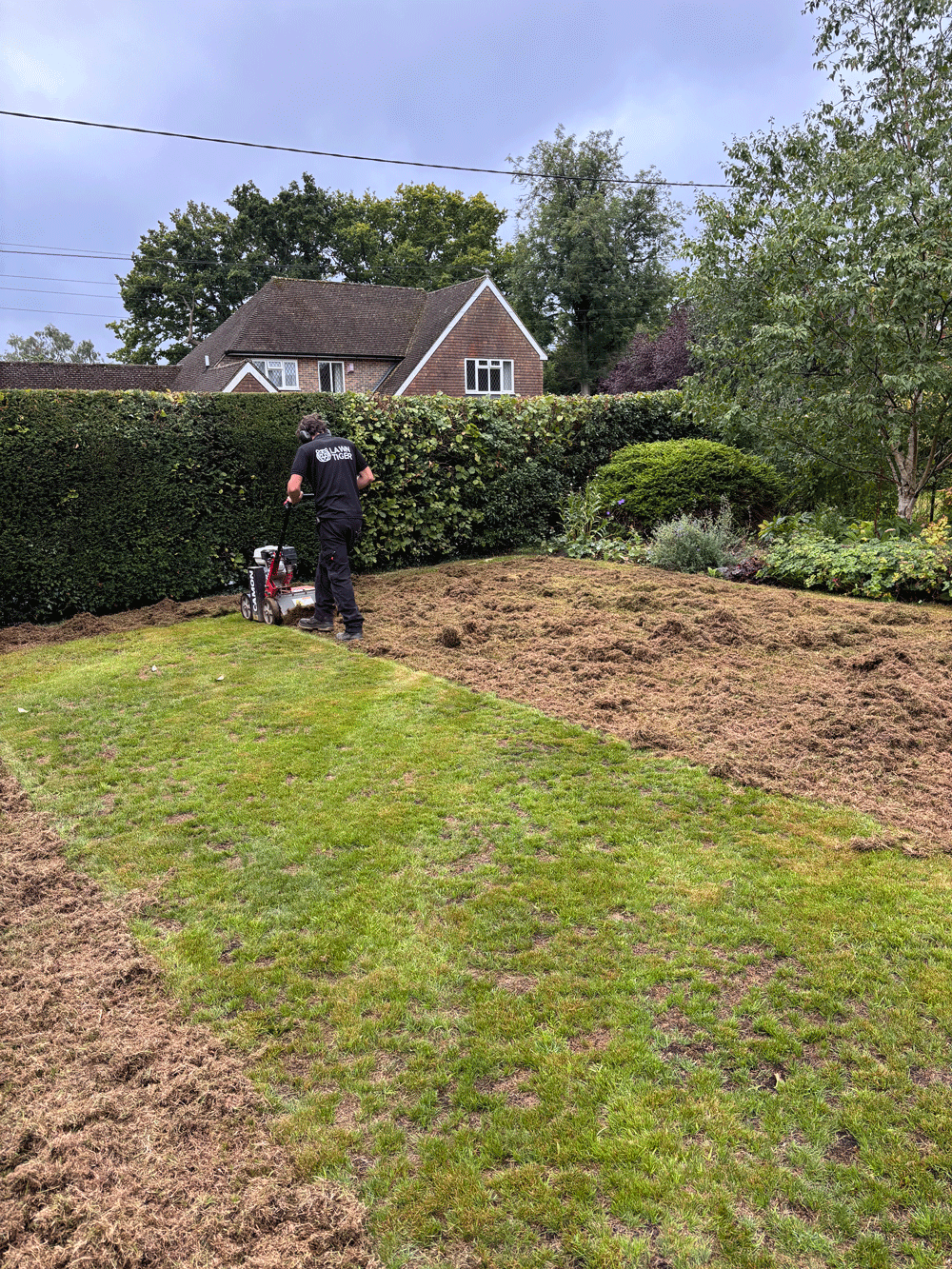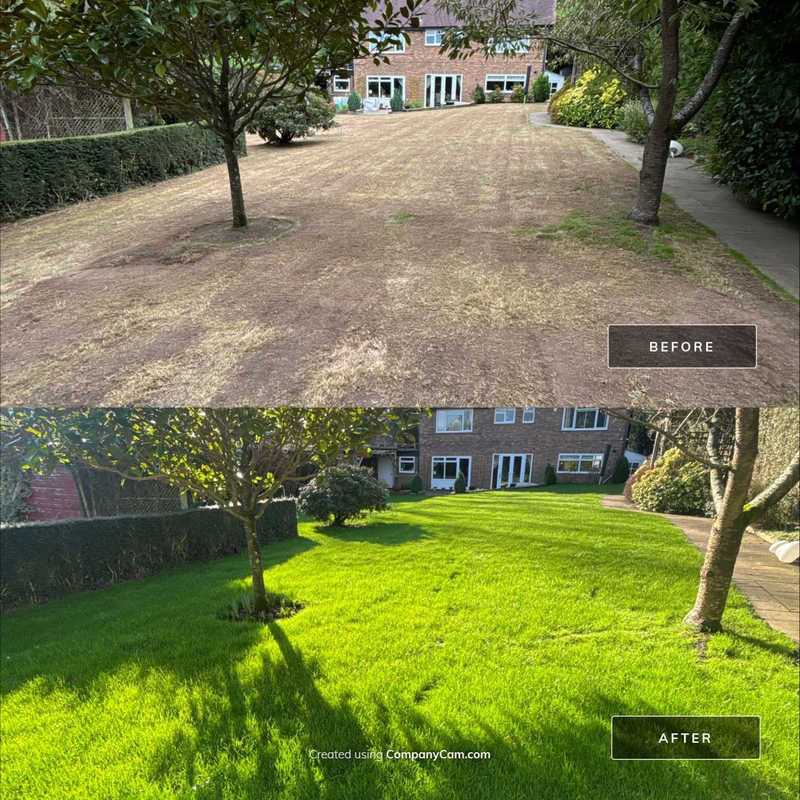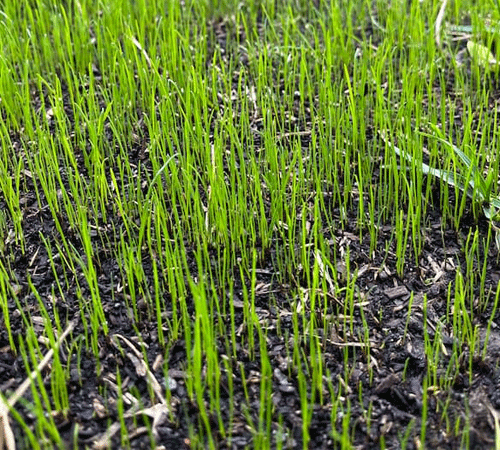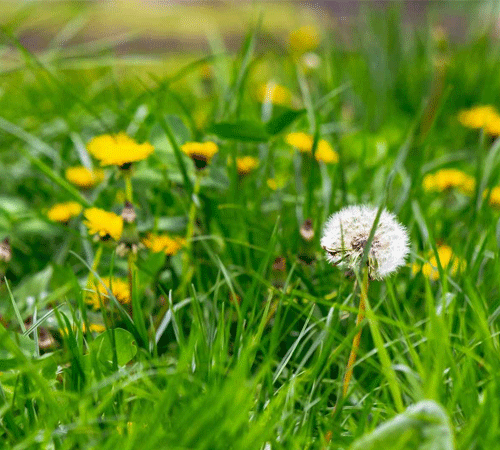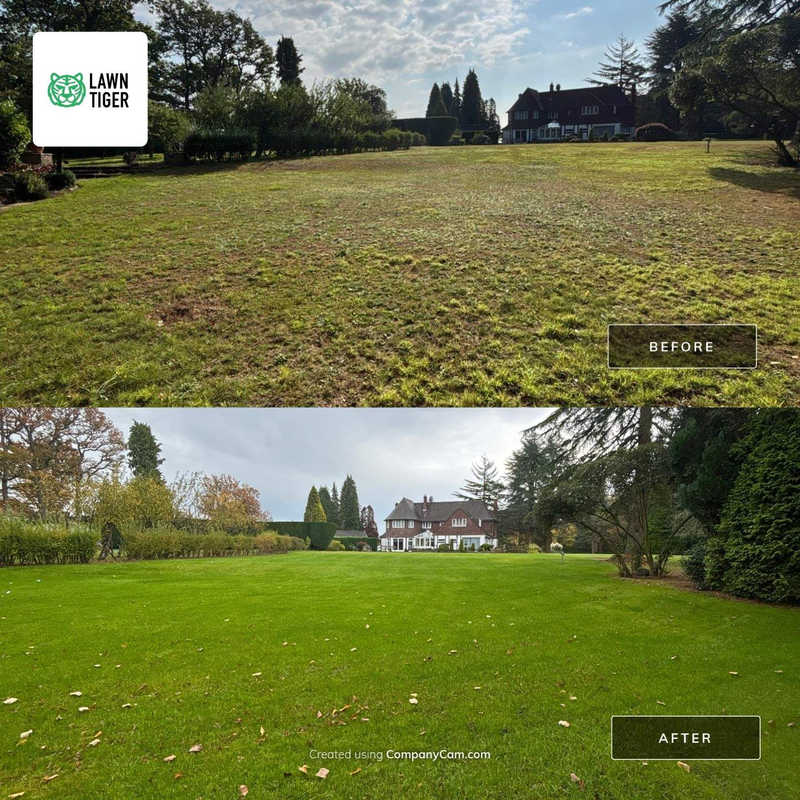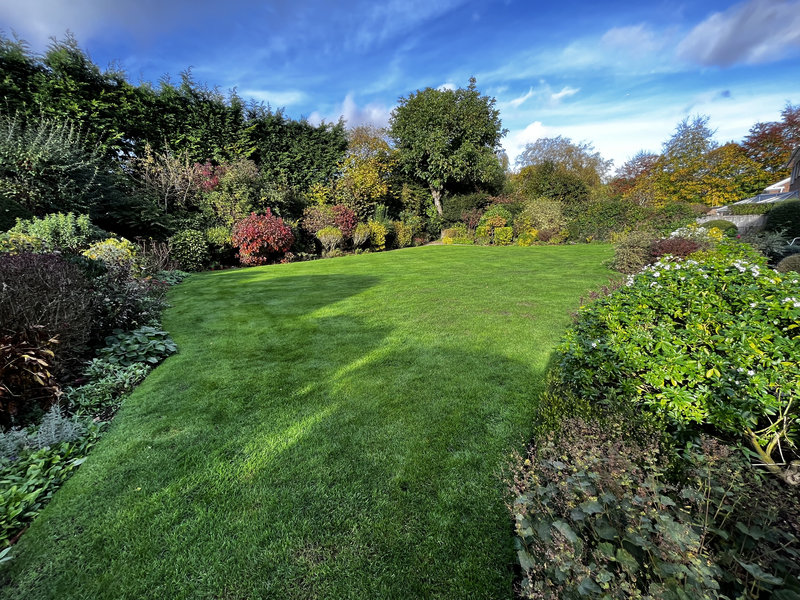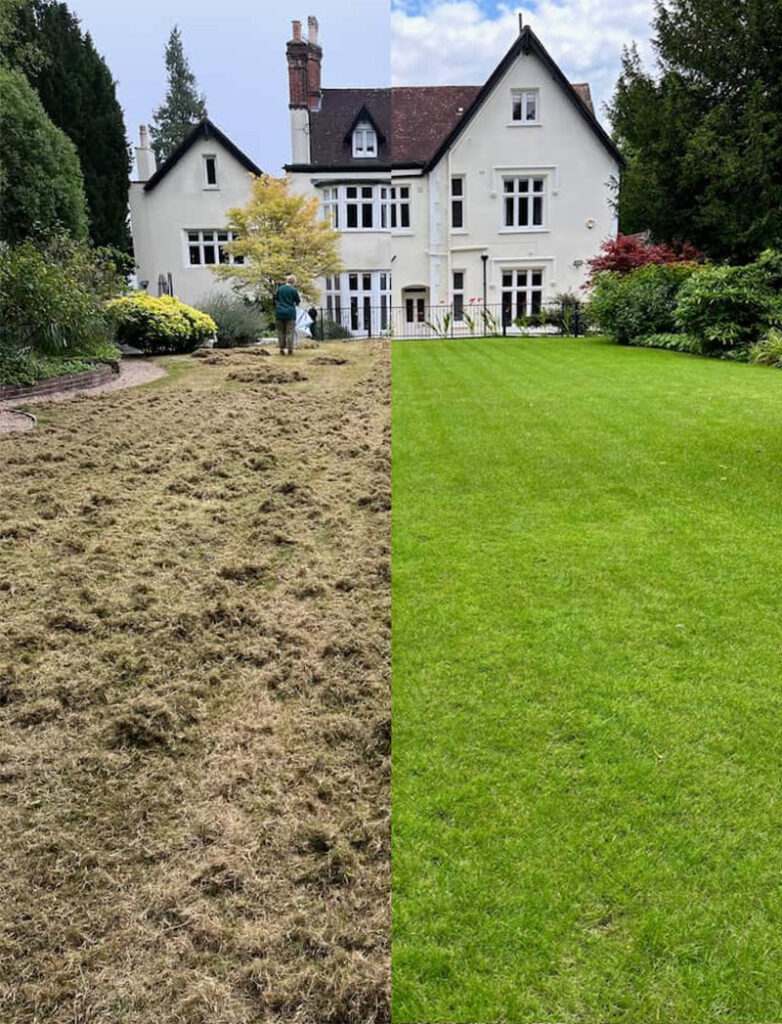
Lawn renovation can be a worthwhile investment if your lawn has widespread issues such as moss, weeds, drainage problems, or thinning grass. It addresses underlying soil and turf health, helping lawns recover more effectively than repeated short-term treatments.
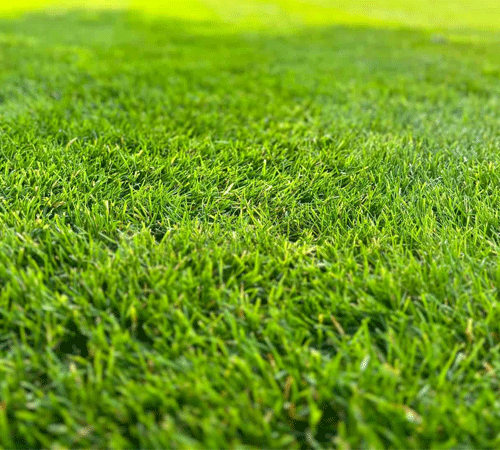
Yes, many damaged lawns can recover with the right treatments and proper timing. Renovation improves soil condition, introduces new grass seed, and encourages stronger root growth, allowing the lawn to gradually become thicker, healthier, and more resilient.
A lawn may need renovation if it has large bare patches, persistent weeds or moss, poor drainage, compacted soil, or weak grass that does not improve with feeding and routine treatments. Multiple issues occurring together usually indicate deeper lawn health problems.
Renovation is often more cost-effective than re-turfing because it improves the existing lawn rather than replacing it entirely. While results take time, renovation avoids the higher material and labour costs associated with removing old turf and laying new grass.
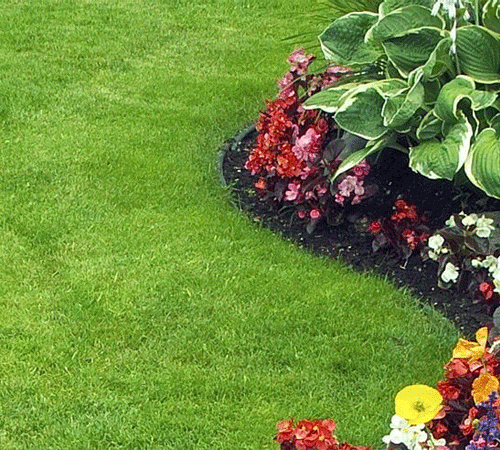
Results can last for many years when supported by proper mowing, seasonal feeding, and good lawn care practices. Healthy, well-maintained lawns are more resistant to weeds, moss, and thinning, reducing the need for future major repairs.
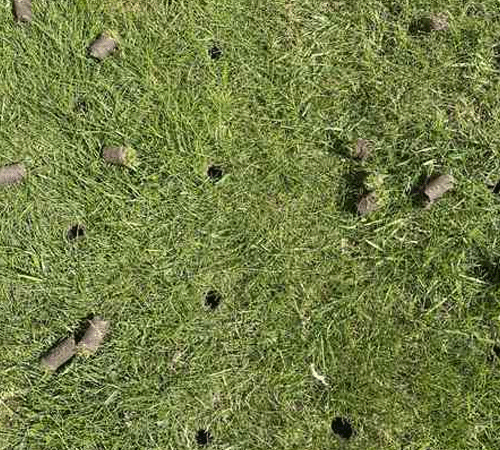
Renovation can significantly improve drainage by relieving soil compaction and improving soil structure. Aeration allows water to move more freely through the soil, reducing surface pooling and creating better conditions for healthy root development.
Renovation is often more effective for lawns with widespread damage, as it tackles underlying soil and grass issues. Regular treatments are better suited to maintaining lawns that are already in reasonably good condition.
Spring and early autumn are usually the best times because grass is actively growing and soil conditions support recovery. These seasons help new grass establish before extreme summer heat or winter cold slows growth.